
SIP Outcomes
Shakespeare in Prison│Outcomes
Ensemble members have always told us that their work in Shakespeare in Prison has effected enormous changes in themselves. But how does SIP “empower” people to use Shakespeare as a catalyst to radically alter their lives—and their very identities? How can we define that process?
Without the ability to do that, measuring success meant relying on anecdotal evidence and “downstream effects” like recidivism. Many prison arts programs face this same challenge, and we simply couldn’t find a method of defining outcomes that gelled with what we thought was happening in SIP.
2016-17 Case Study
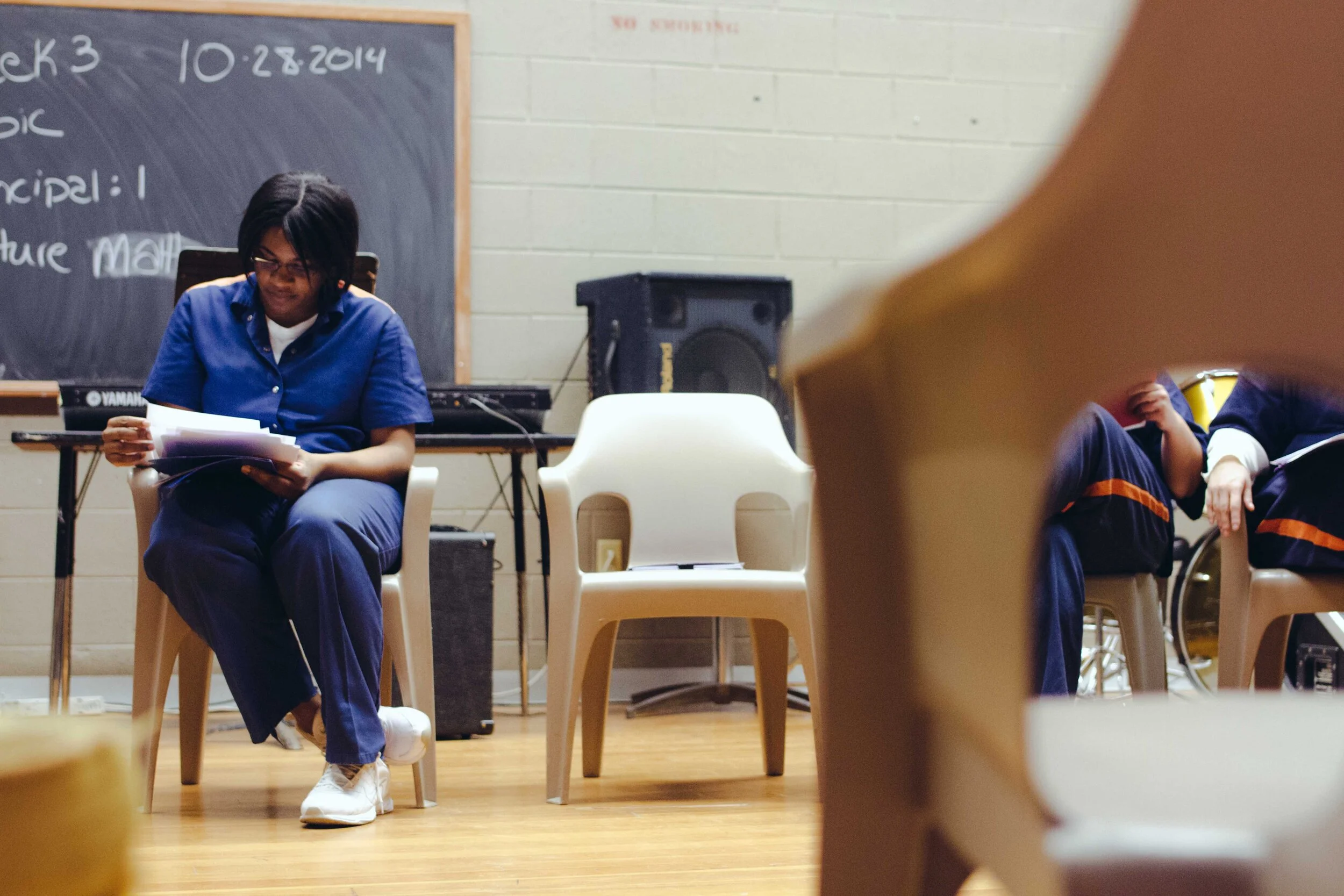
In 2016, SIP’s team of facilitators set out to explore and document measurable outcomes, focusing on accurately describing the actual work that goes on in the ensemble. We asked the question:
How does one season of Shakespeare in Prison impact the ensemble member’s sense of identity in the correctional context?
We found that participation in a season of Shakespeare in Prison has the potential to profoundly change an ensemble member’s narrative identity through two distinct but interrelated processes:
THE THEATRICAL PROCESS
Responses and experiences that come from or through the play itself.
THE OPERATIONAL PROCESS
Responses and experiences that come from working in an ensemble.
The study’s findings would be a heck of a lot to describe in detail here—too much, in fact! If you’d like to read our write-up of the study’s results (and we so hope you do!), click here. You can also watch the recording of our “Process + Outcomes” webinar above or on YouTube.
Following Up: The Long-Lasting Effects of SIP Involvement - 2021
The case study analyzed a single season of SIP involvement, focused only on the correctional context of participants’ lives, and was primarily interested in defining the process through which SIP involvement changed participants’ narrative identities, not in evaluating the long term outcomes of that change. SIP staff have now completed a follow-up report that looks beyond a single season, beyond the correctional context, and beyond the process: it is focused on evaluating the long-term results of SIP involvement.
In the spring and summer of 2020, SIP staff conducted formal interviews with 11 formerly incarcerated alumnae focused on a series of questions about their narrative identities in terms of their past, present, and future selves. We found that the Shakespeare in Prison experience has three long-lasting effects on its participants: enhanced self-efficacy, more fully developed empathy for oneself and others, and a positive sense of community. All of these traits are associated with positive outcomes in work and life, and all three are especially important for people who have been incarcerated, as they face substantial challenges in employment, housing, and community support upon return.
To read the follow-up study, click here!
Outcomes Evaluation - 2026
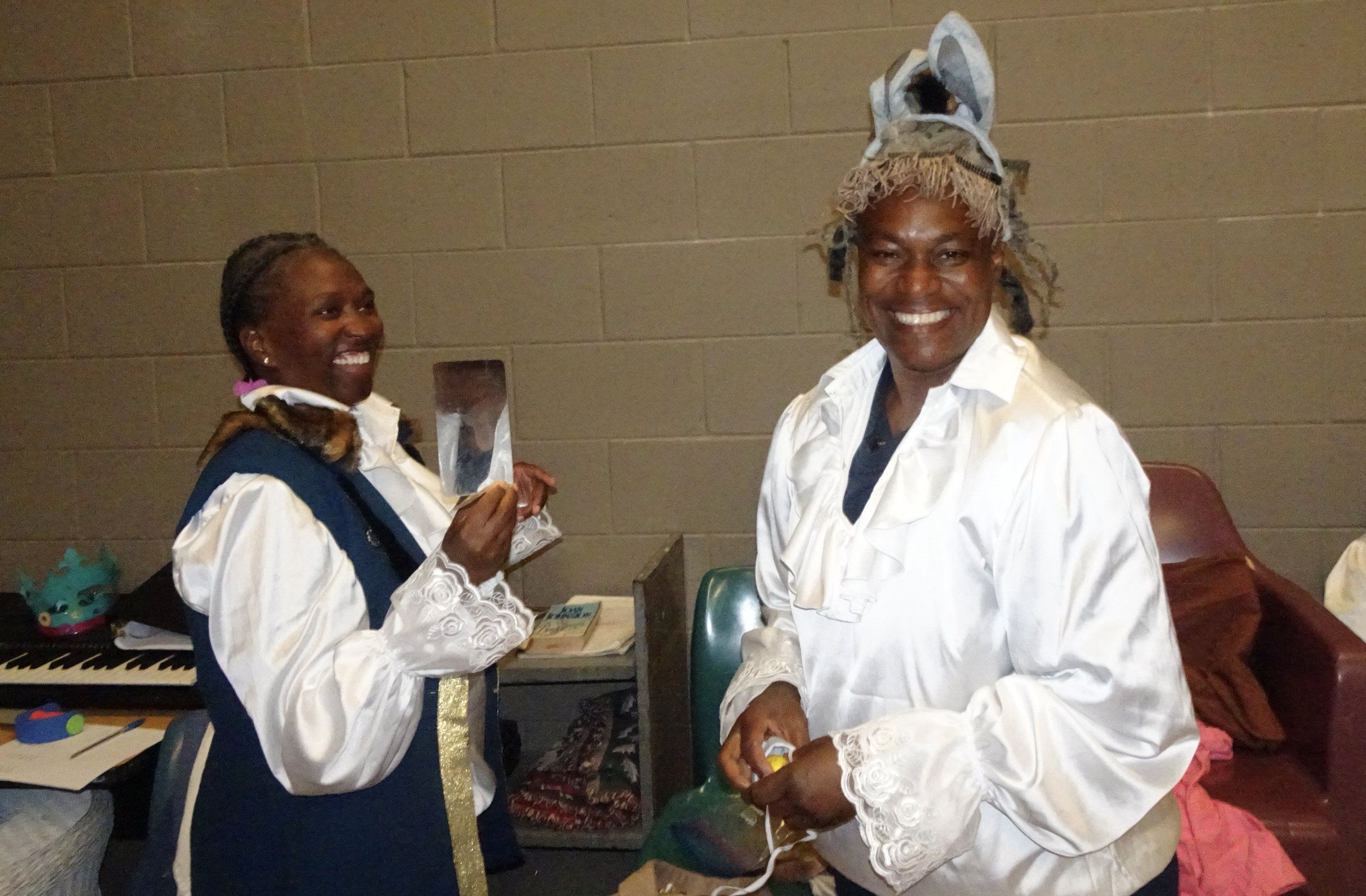

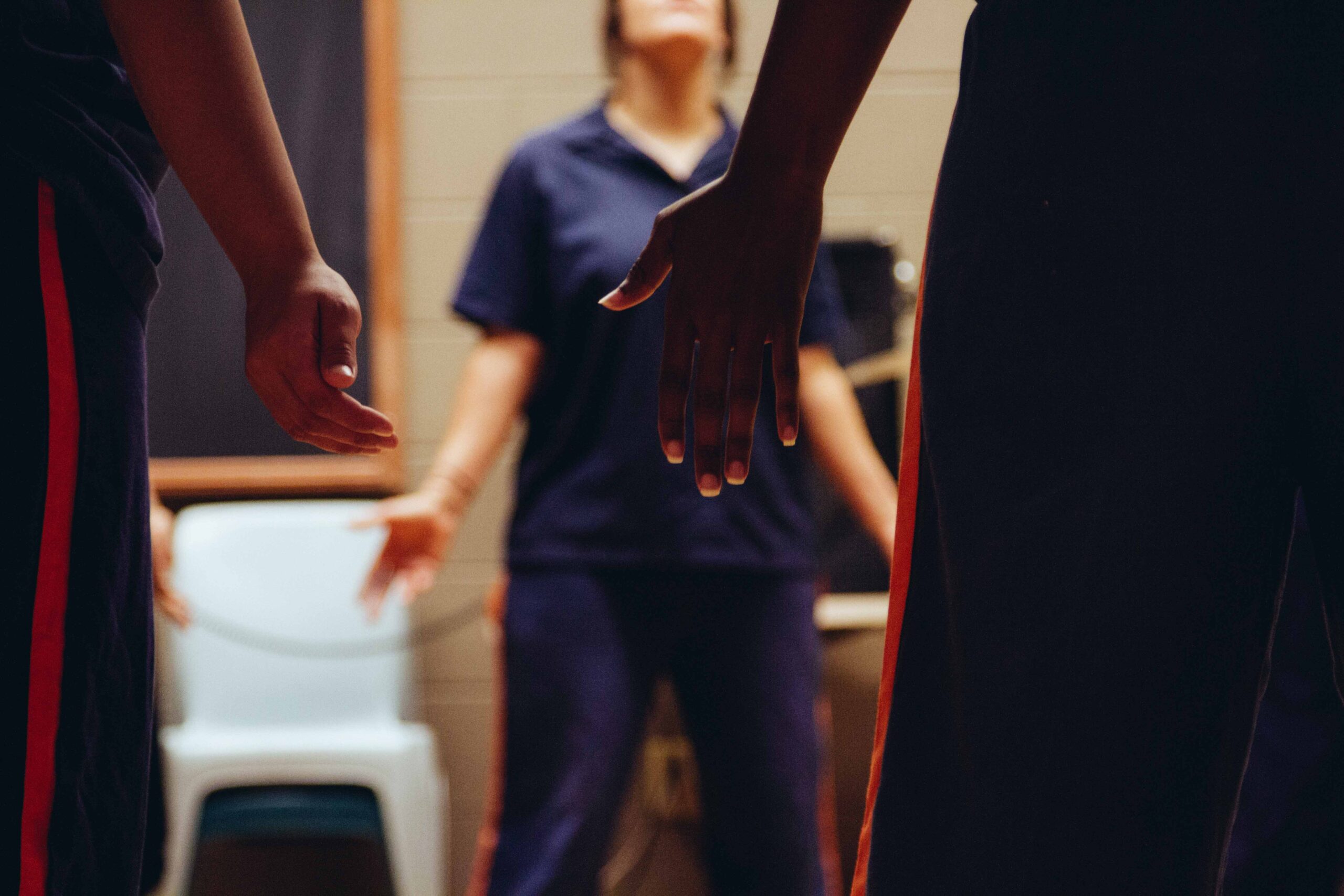
In 2026, Shakespeare in Prison completed an outcomes evaluation examining the relationship between participation in SIP and participants’ experiences after release. Authored by former SIP Director Kyle Fisher-Grant, the study draws on internal program data and interviews with released SIP alumni to examine patterns in program engagement, recidivism, personal development, and reentry.
What We Found
The study found a consistent relationship between deeper engagement in Shakespeare in Prison and lower odds of returning to prison. Participants with sustained engagement in SIP had roughly 50% lower odds of recidivism than participants with lower levels of engagement. This pattern remained consistent across multiple measures of participation and when accounting for factors including age, sentence length, offense type, prior incarceration history, and differences in county-level economic conditions.
The study also looked beyond the numbers to understand what participants themselves believe changed through their involvement in SIP. Alumni consistently described two interconnected areas of growth: inward change, including greater self-awareness, confidence, emotional regulation, identity, and purpose; and outward change, including stronger communication, trust, empathy, collaboration, belonging, and community.
Importantly, participants described these changes as developing through continued engagement in the ensemble process, rather than through brief exposure to the program. Alumni described SIP as a rare space within the correctional environment where reflection, vulnerability, trust, and meaningful connection could develop over time.
Understanding the Broader Impact
When the observed outcomes are considered across the program’s full sample, the study estimates that sustained engagement corresponds to approximately 23 fewer expected returns to prison, or roughly 130 fewer years of incarceration. Using approximated Michigan correctional costs, the study contextualizes this as an estimated $6 million–$8.5 million in incarceration-related resources over the life of the program. These figures are not presented as a formal return-on-investment calculation, but as a way of understanding the potential scale of the observed differences.
The evaluation does not claim that Shakespeare in Prison causes these outcomes. Rather, it identifies a clear and consistent association between meaningful engagement in the program and differences in participants’ lives after release. As the study concludes, the findings suggest that when people have the opportunity to engage deeply in a space built on trust, challenge, and connection, different outcomes become possible.
2026 Shakespeare in Prison Outcomes Evaluation
Authored by Kyle Fisher-Grant, former Director of Shakespeare in Prison, Fisher-Grant Evaluation LLC
But wait… There’s more!
Detroit Public Theatre is deeply grateful to these past and current Corporate, Foundation, and Government funders for their generous support of Shakespeare in Prison.
But wait… There’s more!

Inside SIP
If you’re looking for photos, videos, the blog, and activity packs—this is the page for you!

Donate to SIP
Your support is crucial as we continue our work in prisons, and with SIP alumni post-release through Shakespeare Reclaimed.

SIP History
Wondering what we’ve been up to since our founding in February 2012? Well, lucky you—we made a timeline with all the major milestones.